
Carceral housing: Current conditions report
Report back from P.O.W.E.R.'s outreach to DTES supportive housing tenants, Sept - Dec 2025

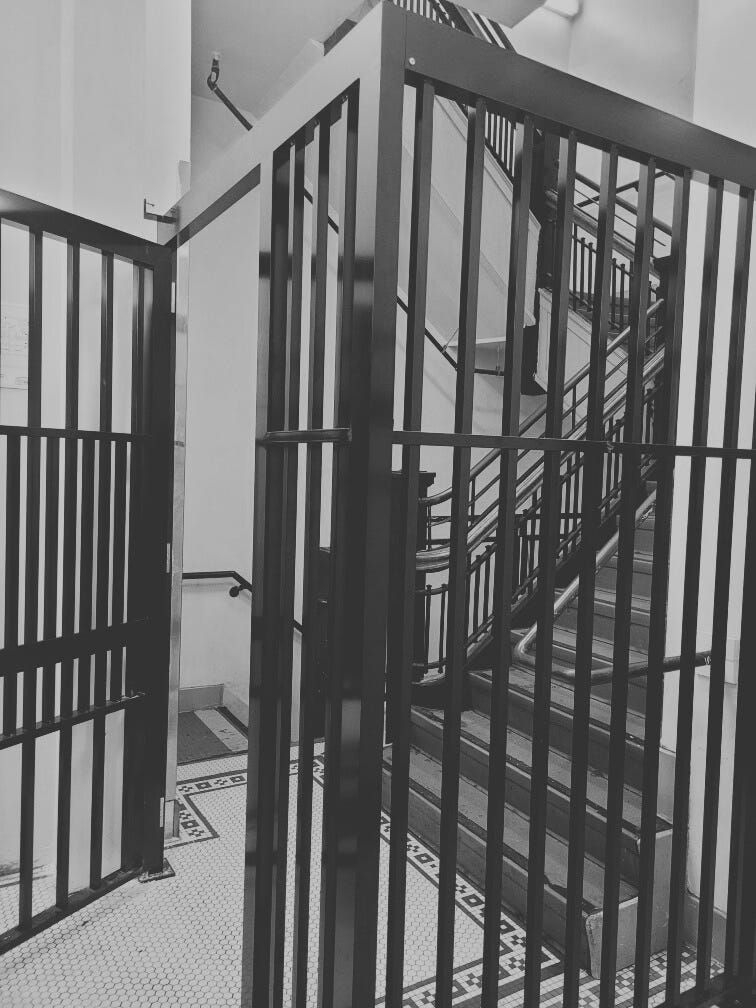
P.O.W.E.R. has received an increasing number of reports related to the carceral conditions governing non-profit or privately managed buildings that make up much of the housing landscape in the DTES, including so-called “supportive housing” buildings.
These reports come on the heels of changes to the low-income housing landscape across Vancouver, including the recently approved DTES Rezoning plan (“Uplifting the DTES”), Residential Tenancy Act (RTA) amendments, and multiple closures of Single Room Occupancy buildings (SROs) and supportive housing along Granville Street.
Between September and December 2025, P.O.W.E.R. conducted an outreach campaign to speak to people directly about their experiences in “supportive” housing. P.O.W.E.R. members handed out more than 350 Know Your Rights zines, set up housing information booths in the DTES, and connected with people directly about their current housing conditions.
As part of this outreach, we also developed a short survey to build a more cohesive understanding of supportive housing tenants’ experiences and their ideas around ideal housing futures amid heightened precarity. Below, we outline our survey results, as well as some of the conversations we had during this period.
Background
SRO and supportive housing environments have been repeatedly characterized as having heightened surveillance, limited tenancy rights, and unsafe infrastructure, with many residents having to contend with rampant pest problems, mold, broken elevators, and unsanitary conditions.
Non-profit “supportive housing” providers play a central role within the broader carceral continuum in the city, both through their direct integration of police, health, and social service agencies in their daily operations, as well as the strict restrictions they place on tenants through coercive “program agreements” enforced by building management and staff.
In 2024, the province formally changed the RTA to further reduce tenants’ protections in supportive housing. These changes stripped tenants of their rights, including restrictions on their guests, no required for landlord entry, and no right to quiet enjoyment.
Under the guise of “safety” the province (in collaboration with non-profit landlords) have recently threatened to take this one step further by removing supportive housing from the RTA entirely. While the RTA already offers inadequate protections, a policy shift like this would exempt supportive housing landlords from having to adhere to the RTA altogether, potentially giving staff and management ultimate power over tenants’ housing. This threat is occurring against the backdrop of a recently approved rezoning plan in the DTES, which is intended to speed up gentrification in the area by reducing the number of affordable housing options.
Community response to current housing conditions
With so-called supportive housing under attack tenants were eager to share their experiences in supportive housing with P.O.W.E.R. What became clear through our conversations is that, while non-profit landlords and policymakers have evoked notions of figurative ‘problem tenants’ to justify sweeping changes to supportive housing rights, these issues are a product of a broken system that has rarely prioritized building integrity or tenant safety and well-being.
Five central themes regarding the current state of supportive housing emerged from our community surveys.
Surveillance
Speaking to the carceral conditions inside supportive housing, a majority of respondents reported feeling surveilled in their building and more than half observed building staff collaborating with police. In one instance, a respondent was told by staff to “call the police” when trying to resolve a maintenance issue, highlighting how embedded staff-police relationships often are.
Tenants repeatedly spoke to the way that building infrastructure such as CCTV cameras in the hallways and elevators or inaccessible video monitors in management offices, as well as building practices such as staff entering their suites without consent, made them feel powerless and uncomfortable in their own homes. In some cases, respondents reported moving outdoors in order to avoid the constant scrutiny.
Lack of supports
Under the vague banner of “supportive housing,” multiple respondents noted that a lack of staff training around overdose response or first aid put their health and safety at risk. Many questioned how their building was even categorized as “supportive” given the lack of staff responsiveness to health or safety emergencies.
Improved staff training was the number one suggestion made by respondents when asked how they would improve their building conditions, with one respondent telling us, “I feel like I have to scream to be heard by anyone.”
Lack of essential safety
In line with this, over half of respondents stated that there was insufficient access to harm reduction supplies or supports within their building. One respondent told us that their building didn’t have naloxone available to tenants, while another described that there had been three overdoses in their building in the last week and that staff “did nothing,” forcing tenants to respond.
In addition, almost half of respondents felt that their buildings had “significant” guest restrictions. This was flagged as making residents especially vulnerable to overdose amid the worsening drug supply. To date, roughly 85 per cent of overdose deaths have occurred in indoor, private residences.
Conditions of “supportive housing” infrastructure
Building maintenance and hygiene was another issue flagged by respondents. Deplorable housing conditions that included bug or mice infestations, infections stemming from unsanitary conditions, and buildings that were “falling apart” were described as normal. Almost all respondents stated that their management was very slow to respond to maintenance issues, including those that were detrimental to tenant safety.
One respondent spoke about how their sink had been broken for several months, leaving them without running water in their suite. Multiple different people told us that the elevators in their building hadn’t been working consistently for years, with no urgency amongst management to fix the issue. In one instance, a respondent described how the lack of elevator access left his neighbour with mobility limitations “trapped” in his suite.
(In)access to justice
While most respondents spoke to the issues they saw within their buildings, very few were aware that they had any rights under the RTA. Only two of the tenants we met reported taking their tenancy issues to the Residential Tenancy Branch with one reporting it as being an overwhelmingly bad experience.
When asked about the potential changes in removing supportive housing from the RTA almost all responded negatively, noting how it will reinforce already unequal power dynamics.
“The RTA is discriminating, it wasn’t even being upheld anyways so now changes will give them even more legal reasons to evict us,” described one tenant, while another stated: “This is stupid, we are losing more of our rights. If they got their way, they’d keep giving us an eviction notice.”
Suggested improvements for supportive housing amid an uncertain future
Removing supportive housing from the RTA would only worsen already chaotic housing environments by giving landlords full control over supportive housing with zero safeguards for tenants. A move like this, in combination with the DTES Rezoning plan, leaves tenants in an extremely vulnerable position with few alternative housing options and even fewer opportunities for recourse if faced with an eviction or landlord violence.
Rather than removing supportive housing from the RTA, tenants spoke to substantive short and long-term changes that would actually improve conditions within supportive housing.
Short-term changes to improve housing conditions
In terms of day-to-day changes in supportive housing, respondents spoke to the need for improvements to the kinds of supports available, including mandatory trauma-informed harm reduction and mental health staff training.
Respondents consistently discussed making meaningful upgrades to the buildings themselves. Tenants suggested imposing regulations to improve landlord responsiveness to basic repairs and building maintenance issues, including ensuring buildings are free of mold, pests, and other persistent health hazards, as well as maintaining 24/7 access to on-site overdose prevention sites and harm reduction supplies.
The elimination of arbitrary guest bans and restrictions, as well as other mechanisms of surveillance, was also repeatedly suggested. These kinds of rules amplified the feeling that tenants were under constant scrutiny and resulted in increased tenant isolation amid an ongoing drug toxicity crisis.
Lastly, respondents felt that supportive housing tenants should have a larger role in decision-making within their buildings. For example, tenants suggested the development of tenant-led housing models that were similar in structure to co-ops, or having tenant boards with significant input into day-to-day building operations.
Long-term changes to improve housing conditions
In addition to these more immediate improvements, respondents also spoke to the need for long-term structural changes to housing across the city. These changes revolved around upgrading city-wide housing regulations to ensure that all tenants have access to dignified housing.
A strong emphasis was placed on more diversity in housing options for low-income tenants, including independent and non-carceral buildings that exist outside of the “supportive” housing model. For example, some respondents wanted to see a move beyond housing managed exclusively by nonprofits, towards the development of publicly owned affordable (e.g., shelter rate) housing.
For those that hoped to remain in supportive housing, most articulated that they would like to see consistency in how supportive housing is defined and the development of a set of supportive housing standards that landlords are forced to adhere to. Access to supportive housing in neighbourhoods across the city was also identified as a key issue, with respondents suggesting the need for more housing to be built both within and outside of the DTES.
Marked changes to policy to improve the safety of those throughout the city were also seen as being integral to tenant well-being, such as ending drug prohibition and providing access to a safe and regulated drug supply.
Moving Forward
Those we spoke to made it clear that the city and province’s current approach to housing is not working. Tenants in supportive housing deserve the same access to safe, dignified, and affordable housing as do all other tenants. The 2024 changes to the RTA, which stripped away some tenancy rights within supportive housing, have only added to housing precarity, while the infrastructure of many of these building continues to deteriorate
The proposed removal of supportive housing from the RTA amid the fast-tracking of DTES gentrification will only increase the myriad forms of violence and carceral conditions already endured by supportive housing tenants. In order to improve the state of housing across the city, our conversations highlighted that supportive housing tenants must be recognized as experts in their own housing.