
P.O.W.E.R. DISPATCH #9
Update on community-based reporting at P.O.W.E.R.

Dispatch #9 Themes
Violence in city cells
P.O.W.E.R. has received a number of alarming reports of acute violence experienced in city and holding cells. Footage from city and holding cells is notoriously difficult to retrieve and remains a space where Vancouver Police Department officers have physically assaulted community members, and faced no accountability. P.O.W.E.R. cannot underscore enough the disturbing nature of group VPD assaults that have been reported in city cells and in public space, leaving people with no recourse to seek justice, even within BC’s inadequate landscape of police “accountability” mechanisms.
Police shake downs of vendors at Main & Hastings
The VPD are making their presence felt at Main and Hastings, regularly cracking down on vendors and violently displacing anyone hanging out near the intersection. The revival of street vendor crackdowns has been reported to P.O.W.E.R. more regularly in recent months, coinciding with the ongoing expansion of police power endorsed by Mayor Ken Sim and ABC. We anticipate that this kind of targeting will only increase in the lead up to the City of Vancouver hosting a mega-sporting event, with the first FIFA 2026 event kicking off at the end of April.
Red Zones
Red zones/red listing are area restrictions enforced in two main ways in the DTES: 1) via behavioural conditions imposed by the court (through probation, etc.), or 2) informally through police officers threatening fines or charges against specific individuals. During outreach, P.O.W.E.R. has heard about an uptick of the latter. Impacts of area restrictions can range from specific sites to multi-block radiuses, and can include impeding someone from accessing critical harm reduction services, community spaces, and sometimes, even their housing. This is a commonly exercised tactic by the carceral system which effectively splinters people from their communities and support networks. This also acts as a driver of gentrification and disappearing poor people out of the DTES.
Police officers attending routine overdose events
P.O.W.E.R. members have increasingly experienced, witnessed, and received reports on VPD officers attending and interfering with routine overdose events. The VPD’s internal policy since 2016 has been non-attendance at routine overdose events. This non-attendance policy is in recognition that the risk of criminalization can deter people from calling for an emergency medical response. Read more about P.O.W.E.R.’s calls for cops out of overdose response here.Sedatives in the supply
Unpredictable concentrations and different types of sedatives continue to show up in the criminalized drug supply. This includes the emergent Medetomidine, which, when used unknowingly or in higher than intended amounts, can lead to intense vomiting, as well as cardiac and respiratory suppression. Losing consciousness for a prolonged period of time is increasingly common, and can have serious health and social (e.g., increased incidences of gender-based violence) impacts. Check on your neighbours!
Newsletter highlights
As part of P.O.W.E.R.’s work against carceral housing expansion, the group recently released a report on current conditions in supportive, transitional, and SRO housing, as well as a short video (in collaboration with Dogwood BC) on the non-profit landlord and government attack on supportive housing. On the same day that our report was released, BC Housing Minister Christine Boyle tabled Bill 11, a deadly piece of legislation that, if passed, will consolidate state and landlord powers to lockout and evict tenants on the basis of having a weapon (undefined term), guest possession of a weapon – even before going through the Residential Tenancy Branch processes.
The first peer-reviewed study using data collected, analyzed and authored by P.O.W.E.R. was published in the International Journal of Drug Policy.
P.O.W.E.R. in media
Filter magazine: In Vancouver’s DTES, Harm Reduction Moves Forward Without Decrim
Peace Arch News: Advocates urge Province to halt Bill 11, citing threats to tenant safety and rights
The Philanthropist: What happens to labour rights in a sector built on care?
Filter magazine: In British Columbia, Drug Policy Rollbacks Are Limiting HIV Care
CBC News: Toxic drug deaths in 2025
Community activity
P.O.W.E.R. members Paul, Harley, and Molly presented at the FIFA townhall hosted by the Carnegie Housing Project, alongside other community groups such as SWAN, the Vancouver Area Network of Drug Users, and Pivot Legal Society. P.O.W.E.R. members shared the patterns of criminalization the group has seen as of late. Members focused on impacts felt in the DTES community, as well as anticipated policing practices, trends and tactics that are characteristic of mega-sporting events.
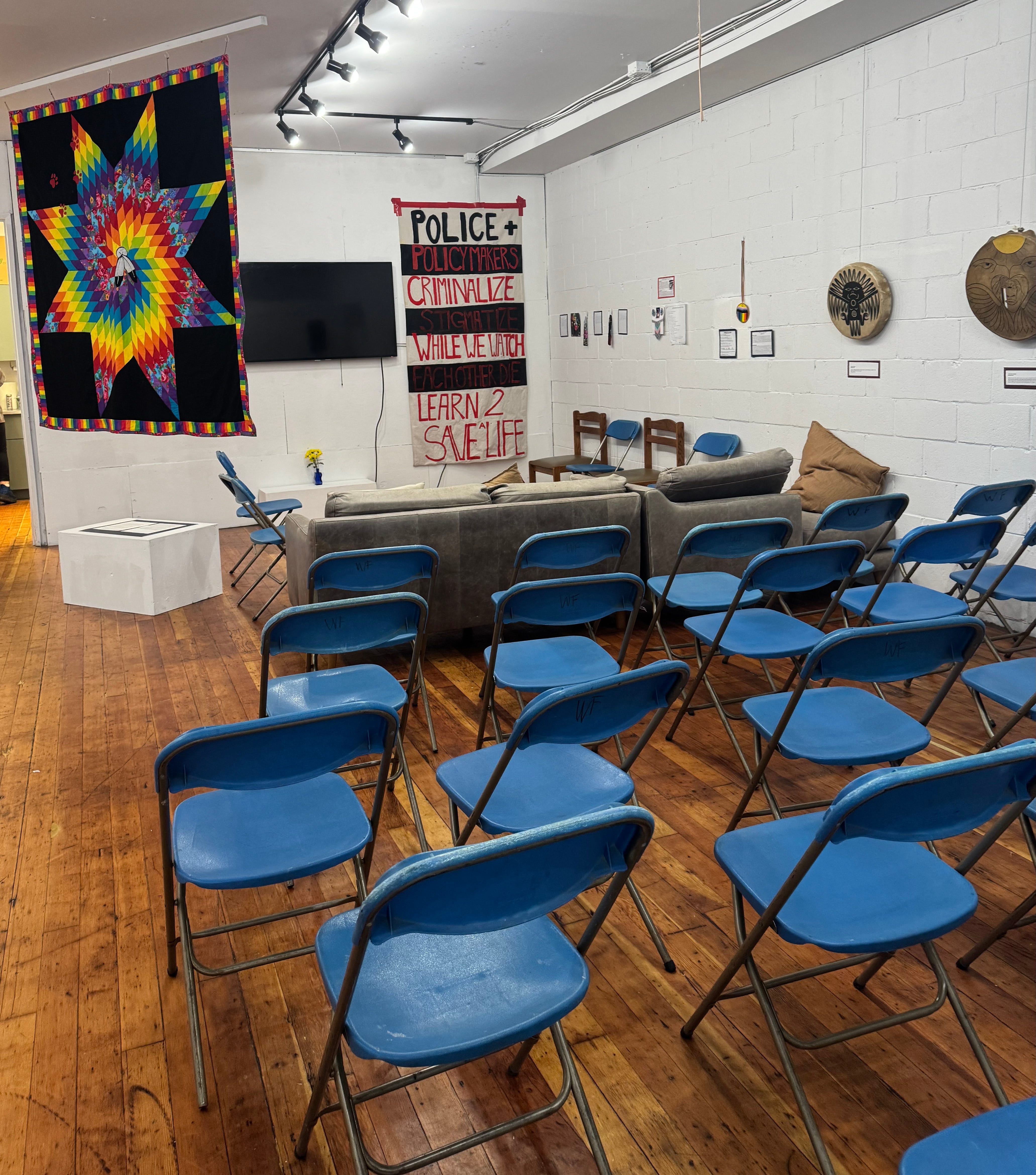
P.O.W.E.R. hosted an event during the Vines Art Society and Joint Effort collaborative art exhibit in March, which featured pieces by currently and previously incarcerated kin and community members. P.O.W.E.R. presented themes from our first 15 months of community-led reporting and reflections on resisting rising carcerality. Big thank you to Alicia Williams for opening the event and making bannock!
P.O.W.E.R. continues to run weekly block watch.
If you, your group, or your community is thinking about setting up a block watch don’t hesitate to reach out to us at power@vandu.org, we’re always happy to talk and trade tips.
New research feat. P.O.W.E.R. members
International Journal of Drug Policy: Confiscations, public health obstructions, and perpetual displacement: Experiences and perspectives on urban law enforcement practices during a period of “recriminalization” among people who use criminalized drugs
University of Toronto Press: Changing the System: Steps Towards Empowering Community Governance of Research Ethics in the Downtown Eastside of Vancouver